
12-Day Morocco Tour from Casablanca
Essential Tour Overview
Discover the complete Morocco experience with this meticulously crafted Morocco itinerary 12 days that takes you from the cosmopolitan streets of Casablanca to the endless dunes of the Sahara, through ancient imperial cities, and along the windswept Atlantic coast. This comprehensive journey reveals Morocco’s incredible diversity, where Roman ruins meet medieval medinas, snow-capped mountains give way to golden deserts, and centuries-old traditions thrive alongside modern Moroccan life.
This 12 days in Morocco itinerary isn’t just another tourist; it’s a carefully balanced journey designed by local experts who understand that Morocco deserves more than a rushed visit. Unlike packed itineraries that leave you exhausted, this twelve-day exploration allows time to truly absorb each destination’s unique character.
You’ll spend meaningful time in each location: two full days to unravel Fes’s medieval mysteries, dedicated desert immersion beyond a quick camel ride, leisure to wander Chefchaouen’s blue streets without rushing, and the flexibility to customize experiences based on your interests. This is Morocco at the perfect pacecomprehensive yet comfortable, authentic yet accessible.
Tour Highlights
- Hassan II Mosque, Casablanca: Stand in awe before one of the world’s largest mosques, where the minaret soars 210 meters above the Atlantic Ocean. This architectural masterpiece, with its retractable roof and floor partially built over the sea, represents the pinnacle of Moroccan craftsmanship, 67,000 square meters of intricate zellige tilework, hand-carved marble, and painted cedar.
- Fes El Bali Medina: Navigate the world’s largest car-free urban zone, a UNESCO World Heritage Site where over 9,000 winding alleys create a medieval labyrinth unchanged for centuries. Visit the University of Al Quaraouiyine, founded in 859 CE and recognized as the world’s oldest continuously operating educational institution.
- Bahia Palace, Marrakech: Wander through this 19th-century masterpiece of Moroccan architecture, where 160 rooms surround serene courtyards adorned with carved cedar ceilings, stained glass windows, and gardens bursting with orange trees and jasmine.
- Chefchaouen – The Blue Pearl: Lose yourself in the enchanting blue-washed streets of this Rif Mountain town, where every corner reveals a new shade of azure. The Spanish Mosque overlook offers panoramic views that capture why this is Morocco’s most photographed destination.
- Sahara Desert – Erg Chebbi Dunes: Experience the magic of the Sahara with a sunset camel trek across towering dunes that can reach heights of 150 meters. Sleep under a blanket of stars in a luxury desert camp, where the Milky Way stretches across the sky with impossible clarity.
- Todra Gorges: Walk through this spectacular canyon where limestone cliffs tower 300 meters overhead while the passage narrows to just 10 meters wide. The light filtering through this natural corridor creates an ever-changing display of colors on the ancient rock walls.
- Cedar Forests of Azrou: Meet Morocco’s wild Barbary macaque population in their natural habitat within North Africa’s largest cedar forest, where trees over 400 years old create a cool mountain sanctuary.
- Volubilis Roman Ruins: Step back 2,000 years at Morocco’s best-preserved Roman archaeological site. Walk streets once traversed by Roman merchants, admire intricate floor mosaics depicting mythological scenes, and stand beneath the Arch of Caracalla against a backdrop of rolling wheat fields.
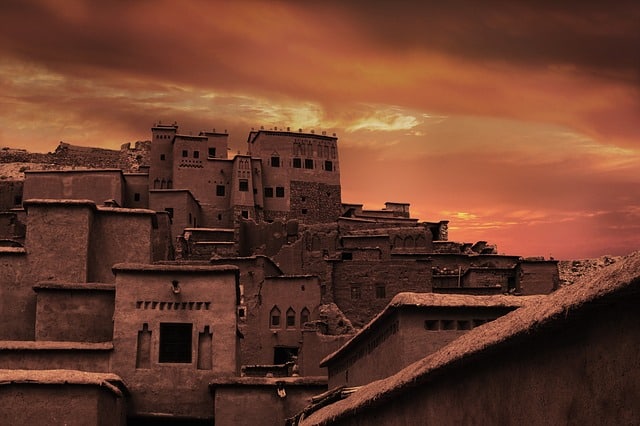
- Ait Ben Haddou Kasbah: Explore this UNESCO World Heritage fortified village, whose earthen towers have provided the backdrop for countless films, including Gladiator, Game of Thrones, and Lawrence of Arabia. Cross the river via stepping stones to climb through this living museum where several families still maintain traditional life.
- Jemaa El Fna Square, Marrakech: Witness the nightly transformation of Africa’s most famous square, where storytellers, musicians, snake charmers, and food stalls create a sensory spectacle that has enchanted visitors for a millennium.
- Essaouira Medina: Stroll the ramparts of this 18th-century Portuguese fortress city, where blue fishing boats bob in the harbor, art galleries line whitewashed streets, and the Atlantic wind has shaped a unique, laid-back atmosphere.
- Fes Tanneries: Watch leather artisans practice 11th-century techniques in the famous Chouara Tannery, where natural dyes create honeycomb pools of vibrant colors and traditional skills pass from generation to generation.
- Nomadic Families: Share mint tea with nomadic Berber families living in traditional tents near the Sahara, learning about their pastoral lifestyle adapted to one of Earth’s harshest environments.
- Traditional Souks: Navigate the maze-like markets of Fes and Marrakech, where carpenters’ hammers ring out, spice pyramids perfume the air, and craftsmen create intricate metalwork using techniques unchanged for centuries.
Detailed Morocco Travel Itinerary 12 Days
Day 1: Arrival in Casablanca - Gateway to Morocco
Your 12 day itinerary Morocco adventure begins the moment you step off your flight at Mohammed V International Airport in Casablanca. Your private driver will be waiting in the arrivals hall, holding a sign with your name, ready to assist with your luggage and escort you to your comfortable, air-conditioned vehicle.
The drive into Casablanca offers your first glimpses of modern Morocco, wide boulevards lined with palm trees, French colonial architecture alongside contemporary buildings, and the constant energy of Morocco’s largest city and economic capital, home to over 3.5 million people.
After settling into your hotel and freshening up, visit the magnificent Hassan II Mosque, perched dramatically on an outcrop over the Atlantic Ocean. This isn’t just Morocco’s largest mosque; it’s the seventh-largest in the world and features the world’s tallest minaret at 210 meters.
Non-Muslims can enter during guided tours (typically at 9 AM, 10 AM, 11 AM, and 2 PM, except during Friday prayers). Step inside to marvel at the soaring prayer hall that can accommodate 25,000 worshippers, with space for another 80,000 in the exterior courtyard. The retractable roof, hand-carved marble, intricate zellige mosaics covering every surface, and the innovative design allowing part of the floor to be built over the ocean create an unforgettable experience.
Your guide will explain the mosque’s construction story, how 10,000 artisans and craftsmen worked for seven years to create this masterpiece commissioned by King Hassan II, completed in 1993. Learn about the symbolism woven throughout the design, from the Quranic verses inscribed in calligraphy to the positioning facing Mecca.
If time allows, take a leisurely walk along La Corniche, Casablanca’s scenic beachfront promenade. Watch locals and visitors alike enjoy the Atlantic breeze, sip coffee at outdoor cafes, and witness your first Moroccan sunset, painting the sky in shades of orange and pink over the ocean.
Return to your hotel for dinner (on your own) and rest, preparing for tomorrow’s journey north to the blue city.
Day 2: Casablanca - Rabat - Chefchaouen (the Blue Pearl)
After breakfast, depart Casablanca heading north along the Atlantic coast toward Rabat, Morocco’s political and administrative capital. Despite being the nation’s capital, Rabat maintains a more relaxed atmosphere than bustling Casablanca, with tree-lined boulevards, well-maintained gardens, and a mix of Islamic and French colonial heritage.
Begin at the Hassan Tower, a 44-meter minaret, which represents the ambitious vision of Sultan Yacoub El Mansour, who planned the world’s largest mosque in the 12th century. Though never completed (an earthquake halted construction), the tower and the remaining 200 columns create a powerful historical atmosphere.
Adjacent stands the stunning Mausoleum of Mohammed V, completed in 1971. Royal guards in traditional uniforms stand watch over this beautiful building featuring a green-tiled roof, marble interior, and intricate decoration. The tomb houses King Mohammed V (grandfather of the current king) and King Hassan II.
Wander through this 12th-century fortress district, where Andalusian-influenced blue and white buildings line narrow streets. The kasbah offers spectacular views over the Atlantic Ocean and the river mouth. Visit the Andalusian Gardens, a peaceful oasis of orange trees, fountains, and flowering plants, before browsing the quiet residential streets where locals still live within the ancient walls.
Depart Rabat after lunch (on your own) and head inland toward the Rif Mountains. The landscape gradually transforms from coastal plains to rolling agricultural land, then to increasingly dramatic mountain terrain. Pass through small towns and villages, each offering glimpses into everyday Moroccan life away from tourist centers.
As you climb into the Rif Mountains, the air grows cooler and the scenery more spectacular. Terraced fields cling to steep hillsides, and traditional Berber villages dot the landscape. The final approach to Chefchaouen reveals your first glimpses of the blue color that makes this town legendary among travelers worldwide.
Arrive in Chefchaouen in the late afternoon and check into your hotel or riad. Chefchaouen sits at 600 meters elevation in a valley surrounded by the Rif Mountains, giving it a cooler, more alpine feel than much of Morocco.
Take your first walk through the medina as evening approaches. The blue-washed buildings, painted in every shade from pale sky blue to deep indigo, create a dreamlike atmosphere enhanced by the golden light of late afternoon. The tradition of painting buildings blue may have originated with Jewish refugees in the 1930s or as a mosquito repellent, but today it creates one of the world’s most photogenic destinations.
Wander without a map, getting pleasantly lost in alleyways where potted plants cascade down blue stairs, cats doze on blue doorsteps, and local women in traditional striped fouta cloth and red pompom hats go about daily errands. Stop at a rooftop cafe to watch the sunset over the blue rooftops with the mountains beyond the pure magic.
Driving Distance: Approximately 350 km
Driving Time: 5 hours (including Rabat visit)
Day 3: Exploring Chefchaouen (the Blue City)
Today is dedicated to soaking in Chefchaouen’s unique atmosphere at your own pace. This Morocco itinerary 12 days builds in a full day here because Chefchaouen deserves more than a quick photo stop, it’s a place to relax, wander, and absorb the tranquil mountain vibe.
Your driver can arrange a local guide to lead you through the medina’s highlights, explaining the history of the Kasbah (fortress and museum in the main square), pointing out the best photo spots, and sharing stories about local life. Learn about the town’s founding in 1471 as a mountain fortress against Portuguese invasions, and how it became a haven for Muslim and Jewish refugees from Spain.
Many visitors prefer to wander independently, discovering hidden corners and stopping at cafes for fresh juice and people-watching. Follow the sound of rushing water to this small waterfall at the medina’s edge, where locals traditionally wash clothes, and the mountain water flows crystal clear. Cross the small bridge to find quieter neighborhoods and mountain paths.
The most popular activity in Chefchaouen is the moderate 30-40 minute hike to the abandoned Spanish Mosque on a hillside southeast of town. The mosque itself is simple and no longer in use, but the panoramic views over Chefchaouen’s blue rooftops against the mountain backdrop are simply stunning. Time your visit for late afternoon when the light is perfect for photography. The hike is moderate, following a clear path uphill.
You can visit a traditional Moroccan bathhouse for an authentic cultural experience. After hiking and exploring, a hamam treatment (traditional steam bath with black soap scrub) provides perfect relaxation. Your hotel can recommend nearby hamams, and some offer this service in-house.
As evening falls, settle into one of Chefchaouen’s many rooftop restaurants for dinner. Savor traditional Moroccan cuisine, perhaps lamb tagine with prunes and almonds, or chicken with preserved lemon and olives, while watching the sky deepen to purple and the mountains fade to silhouettes. The cooler mountain air makes evening dining especially pleasant.
Day 4: Chefchaouen - Volubilis (Roman Ruins) - Meknes - Fes
After breakfast and a final morning walk through the blue streets, depart Chefchaouen heading southeast toward the imperial city of Meknes. The route descends from the Rif Mountains through an increasingly Mediterranean landscape, olive groves, vineyards, and wheat fields replace mountain forests.
Arrive at Volubilis, Morocco’s most impressive Roman archaeological site and a UNESCO World Heritage Site since 1997. This ancient city, founded in the 3rd century BCE, became an important Roman administrative center and one of the empire’s most remote outposts.
Walk the ancient Roman streets with your guide, who brings the ruins alive with stories of daily life two millennia ago. Marvel at the remarkably preserved floor mosaics, some of the finest examples of Roman mosaic art anywhere in the former empire. The House of Orpheus features stunning mosaics of dolphins and sea creatures, while the House of the Labours of Hercules displays twelve panels depicting the hero’s legendary tasks.
Stand beneath the Arch of Caracalla, erected in 217 CE to honor Emperor Caracalla and his mother. Explore the Capitoline Temple, the Forum, and the Basilica, imagining the merchants, soldiers, and citizens who gathered here. The oil presses scattered throughout the site demonstrate that olive oil production was central to Volubilis’s economy, just as it remains important in modern Morocco.
Take time to photograph the iconic columns standing against the sky, with storks nesting atop some capitals; these large birds have adopted the ruins as their seasonal home, adding life to the ancient stones.
Continue to Meknes, the 4th of Morocco’s imperial cities. Though less visited than Fes or Marrakech, Meknes offers grandeur without the crowds, magnificent gates, and a more authentic local atmosphere.
Stand before Bab Mansour’s monumental gate, considered Morocco’s most beautiful. Completed in 1732, Bab Mansour features intricate zellige tilework, carved stone decoration, and marble columns reputedly taken from Volubilis. The horseshoe arch and flanking bastions create perfect proportions that inspire awe.
If time permits and you’re interested, visit the Mausoleum of Moulay Ismail, the sultan who transformed Meknes into an imperial capital in the 17th century (one of the few Moroccan mausoleums open to non-Muslims), or wander the medina souks.
Stop for lunch at a local restaurant, perhaps trying Meknes specialties before continuing to Fes. The drive to Fes is short and scenic, passing through agricultural land and olive groves. As you approach Morocco’s spiritual and cultural capital, the landscape becomes more developed, and the ancient city walls come into view.
Check into your hotel or riad in Fes. Many riads in Fes are converted historic mansions within or near the medina, offering traditional architecture with modern comforts. Take the evening to rest and prepare for tomorrow’s full day exploring the medina’s wonders.
Driving Distance: Approximately 240 km
Driving Time: 4.5 hours
Day 5: Fes Guided Medina Tour
Today you’ll dive deep into Fes El Bali (Old Fes), the world’s largest car-free urban zone and one of the world’s best-preserved medieval cities. This sprawling medina encompasses over 9,000 narrow alleys, 300 mosques, and countless souks, workshops, and hidden treasures. A knowledgeable local guide is essential; the medina’s complexity makes independent exploration disorienting, and a guide unlocks stories and access impossible to discover alone.
Begin at the magnificent golden gates of the Royal Palace (Dar El Makhzen). While the palace interior isn’t open to visitors, the seven massive bronze gates with elaborate decoration provide impressive photo opportunities and represent the continued importance of Fes to Morocco’s monarchy.
Next, explore the historic Jewish quarter, established in the 15th century. Though most Jewish families departed for Israel in the mid-20th century, the quarter retains distinct architecture with balconies overlooking narrow streets. Visit the Ibn Danan Synagogue (if open) and the Jewish Cemetery, where white tombstones mark centuries of coexistence.
Enter the medina through Bab Boujloud and descend Talaa Kebira, one of the two main thoroughfares. The street immediately immerses you in medieval Fes, donkeys laden with goods push past, shopkeepers call out greetings, the smell of spices and leather fills the air, and the light filtering through reed coverings creates an otherworldly atmosphere.
Visit this stunning 14th-century Quranic school, considered one of the finest examples of Marinid architecture. The courtyard features floor-to-ceiling decoration, intricate zellige tilework, carved plaster, and cedar wood arabesque patterns that create overwhelming beauty. Climb narrow stairs to see student cells and enjoy rooftop views over the medina.
Continue to the world’s oldest continuously operating university, founded in 859 CE by Fatima al-Fihri. While non-Muslims cannot enter the mosque-university complex, your guide can show you glimpses through doorways and explain its profound historical significancethis institution educated scholars who would influence Europe’s Renaissance.
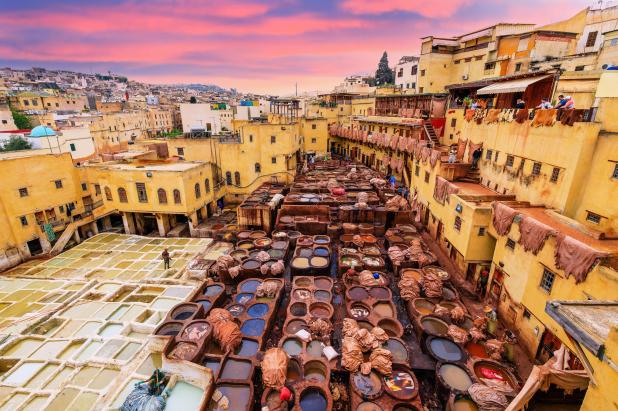
Ascend stairs to a leather shop balcony overlooking the famous Chouara Tannery, where the sight and smell create an unforgettable sensory experience. Below, workers stand waist-deep in honeycomb stone vessels filled with natural dyesvibrant yellows from saffron, reds from poppy flowers, browns from henna, and blues from indigo. Despite the pungent smell of pigeon droppings (used to soften leather), watching artisans practice 11th-century techniques is mesmerizing.
Your guide explains the multi-week process: hides are soaked in lime to remove hair, then in pigeon droppings to soften, before being colored in the dye pits and dried in the sun on surrounding rooftops. This is one of the world’s oldest tanneries, operating with methods unchanged for a millennium.
Continue to this beautiful square dominated by an ornate fountain and the Nejjarine Fondouk (caravanserai), now housing a museum of wooden arts and crafts. The square exemplifies Fes’s layered history, medieval urban planning, elaborate decoration, and continued daily use.
Navigate specialized souks, each dedicated to specific crafts. Watch carpet weavers at traditional looms, metalworkers hammering copper and brass into intricate trays and lamps, tailors embroidering kaftans, and dyers hanging colorful silks to dry. Your guide explains guild systems that organize craftsmen and maintain quality standards passed through generations.
Fes offers excellent shopping without the aggressive sales tactics of larger cities. Browse for handwoven textiles, traditional leather goods, and local artwork, also famous for woven rugs and blankets.
After a full day of sensory immersion, return to your accommodation to rest. Consider a traditional Moroccan dinner at your riad or a restaurant your guide recommends. Fes is famous for culinary specialties including pastilla (savory-sweet pie), r’fissa (chicken with lentils and msemmen), and excellent pastries.
Day 6: Fes - Ifrane and Cedar Forest - Merzouga Sahara Desert
Today marks a dramatic transition in your 12 days tour from Casablanca, from medieval medinas to endless dunes, from mountain forests to desert plains. The longest driving day on the itinerary passes through constantly changing landscapes, making the journey itself an adventure.
Stop in Ifrane, Morocco’s surprising “Switzerland.” Founded by the French in 1929 as a mountain retreat, Ifrane features Alpine-style architecture, spotlessly clean streets, manicured parks, and even a stone lion statue. At 1,665 meters, the town serves as a summer escape from the heat and a winter ski destination. Walk through the tidy center, noticing the European influence that seems to transport you far from Africa.
Continue to the cedar forests near Azrou, where North Africa’s largest remaining cedar trees create a prehistoric atmosphere. Some trees tower over 40 meters tall and date back 400+ years. This is the domain of Barbary macaques, the only macaque species living outside Asia.
Stop for a walk in the forest, where troops of these primates often approach, accustomed to tourist visits. The macaques are wild animals despite their familiarity with people. Observe respectfully, don’t feed them (despite what guides may suggest), and watch for mothers with babies clinging to their backs. The forest’s cool, pine-scented air and dappled light create a magical interlude before descending to desert regions.
Stop for lunch in Midelt, a town situated between the Middle Atlas and High Atlas ranges, known for apple production. Lunch provides an opportunity to stretch and fuel up before continuing. After Midelt, the landscape dramatically transforms. Cross the Tizi n’Talghemt Pass (1,907m) before descending into the spectacular Ziz Gorges. The road curves through narrow canyons where the Ziz River has carved through red rock over millennia.
Emerge into the Ziz Valley, one of Morocco’s most beautiful desert oases. Thousands of date palms create a green ribbon stretching for kilometers along the river, contrasting sharply with the surrounding barren mountains. Stop at panoramic viewpoints to photograph palm groves, traditional ksour (fortified villages), and the scale of this desert oasis.
Pass through Erfoud, the “Gateway to the Sahara,” known for fossil workshops and as the last major town before the dunes. The landscape becomes increasingly arid palm oases give way to flat desert plains, and eventually, the first glimpses of sand dunes appear on the horizon.
Arrive in Merzouga village in the late afternoon. This small settlement at the edge of Erg Chebbi (the great dune field) serves as a base for Sahara experiences. Check into your hotel, freshen up, and prepare for tomorrow’s desert immersion.
From your hotel terrace, watch the sun set over the dunes, painting them in shades of amber, copper, and gold. The sight of these massive sand formations—some reaching 150 meters high—stretching to the horizon creates the anticipation of tomorrow’s adventure.
Enjoy dinner at your hotel and experience the quiet rhythm of desert life. The stars here shine with extraordinary brightness due to zero light pollution—step outside after dinner to witness the Milky Way in all its glory. This is your welcome to the Sahara.
Driving Distance: Approximately 470 km
Driving Time: 7-8 hours
Day 7: Deep Sahara Deep Exploration
Today is entirely dedicated to experiencing the Sahara’s magic through a 4×4 circuit around the Erg Chebbi dune field. This is what makes your Morocco 12 day itinerary special, a full day rather than a rushed camel ride gives you time to truly connect with the desert.
Drive in a 4×4 across desert plains to visit a nomadic family living in a traditional black tent woven from goat hair. These families maintain ancient pastoral traditions, migrating with their sheep and goats to find grazing. Share sweet mint tea (a sacred gesture of hospitality) while learning about their lifestyle, the challenges of finding water, seasonal migrations, traditional desert medicine, and how they maintain identity despite modern pressures.
Your guide translates as the family shares stories, perhaps shows you how they prepare bread in the sand, or demonstrates wool spinning. This intimate cultural exchange offers perspectives on human resilience and different ways of measuring wealth and success.
Visit small workshops where artisans polish fossils from the surrounding desert. This region was covered by ocean millions of years ago, and the exposed ancient seabed yields trilobites, ammonites, and other prehistoric marine life. While polished fossils may be tourist-oriented, the geology is genuinely fascinating.
Stop at a desert oasis where date palms cluster around underground water sources. These oases represent life in the harshest environment, where traditional irrigation channels (khettaras) distribute water to gardens producing dates, henna, and vegetables.
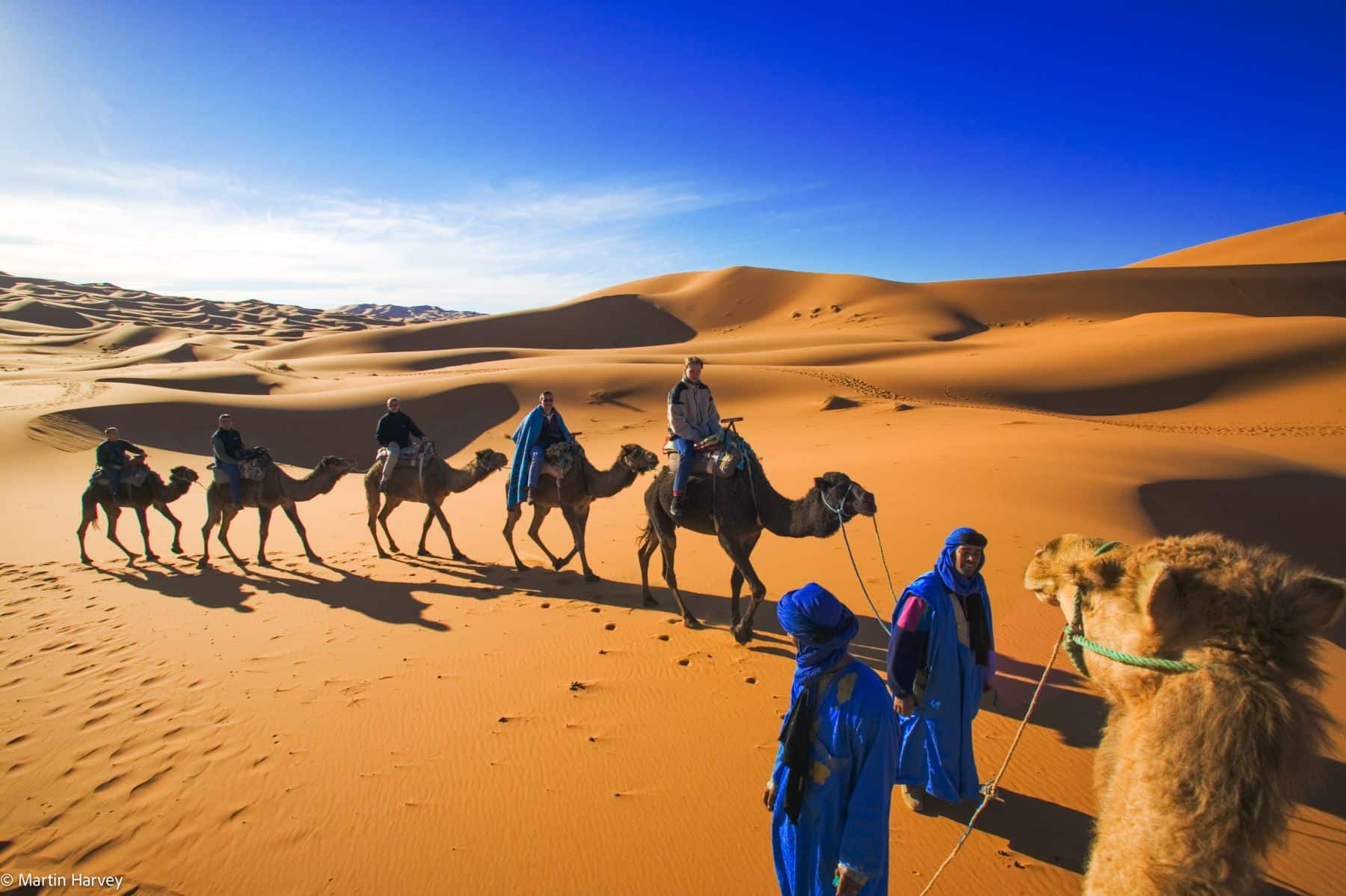
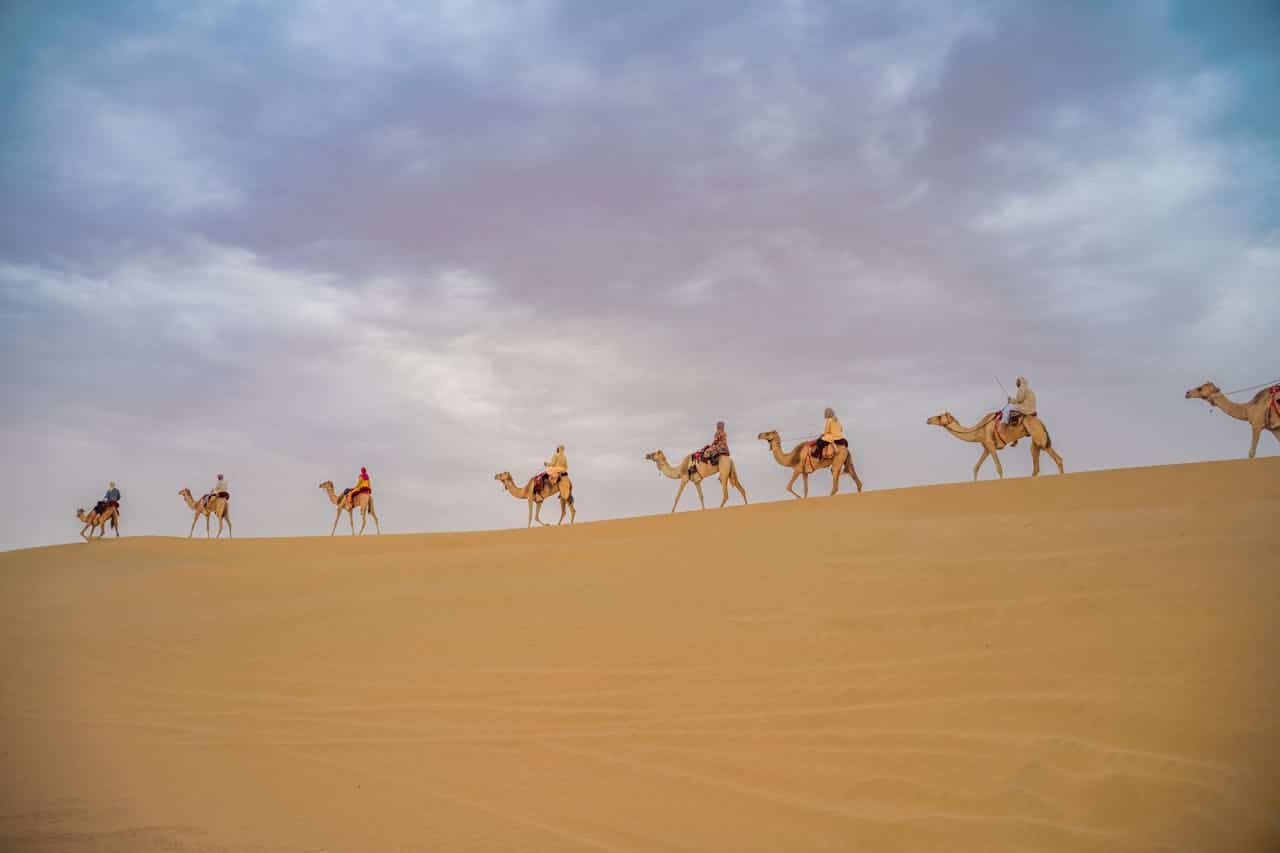
As the day’s heat subsides (around 4:30-6:00 PM, depending on season), meet your camel caravan for the highlight of your Sahara experience. Mount your camel (a surprisingly tall first step!) and set off into the dunes as the sun approaches the horizon.
The one-hour trek takes you deep into Erg Chebbi, away from any structures or roads. The rhythmic swaying of the camel, the silence broken only by soft footfalls in sand, and the overwhelming scale of the dunes create a meditative experience. Watch how the light transforms the landscape—long shadows emphasizing every ripple, the sand color shifting from gold to copper to rose.
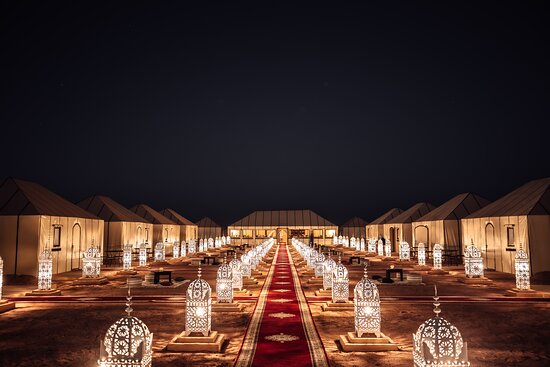
Arrive at your desert camp as the sun sets spectacularly. These camps range from standard (comfortable tents with shared bathrooms) to luxury (spacious tents with private en-suite bathrooms, proper beds, and electricity). All offer the essential elements: isolation, silence, and stars.
After settling into your tent, gather for a traditional Moroccan dinner served in the communal tent. Savor tagine, couscous, and fresh salads while getting to know fellow travelers or your guide.
As night falls, the camp staff builds a bonfire and begins playing drums, the deep rhythms echoing across the dunes. Join in the music, try your hand at drumming, or simply sit back, absorbing the scene.
Later, step away from the firelight to witness the stars in their full glory. The Sahara’s lack of light pollution reveals the universe in ways impossible in cities; the Milky Way stretches as a luminous river across the sky, shooting stars streak regularly, and countless stars invisible elsewhere shine clearly. Many visitors describe stargazing in the Sahara as a life-changing experience that reframes their sense of scale and place in the cosmos. Sleep in your tent with the desert silence as complete as the darkness, broken only by occasional wind moving sand or the distant call of a desert fox.
Day 8: Merzouga - Todra Gorges - Dades Valley
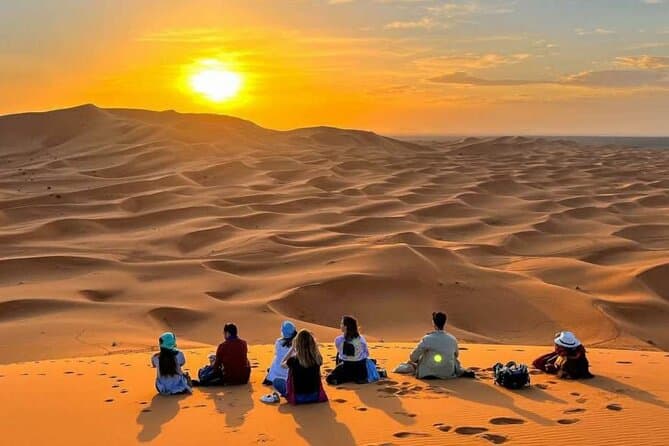
Wake before dawn (around 5:30-6:00 AM, depending on season) to witness sunrise over the Sahara, arguably even more beautiful than sunset. Watch from atop a high dune as the sun emerges from the horizon, its first rays igniting the dune crests in brilliant orange while valleys remain in deep purple shadow. The temperature transformation is dramatic, from cool pre-dawn air to rapidly warming morning, and the silence profound.
After breakfast at camp and a refreshing shower, mount your camel for the return journey to Merzouga village, or opt fora 4×4 transfer if preferred. Return to your hotel to collect luggage and begin the journey westward toward Marrakech.
If your visit coincides with Rissani’s traditional souk days (Sunday, Tuesday, or Thursday), make a brief stop in this historic town. The souk represents authentic rural Moroccan commerce; locals from surrounding villages gather to trade livestock, dates, vegetables, spices, and traditional goods. The donkey auction alone is fascinating theater. This is Morocco unfiltered by tourism, where transactions happen in Berber dialects and traditions extend back centuries.
Drive westward across desert plains that gradually transform into rocky terrain. The route follows ancient caravan paths that connected the Sahara to Mediterranean ports, where traders transported gold, salt, slaves, and exotic goods for over a millennium.
Arrive at the spectacular Todra Gorges, where the Todra River has carved a narrow canyon through limestone mountains over millions of years. The final 600 meters of the gorge are the most dramatic, with vertical walls towering 300 meters overhead, while the passage narrows to just 10 meters wide.
Park and walk through the gorge, feeling the temperature drop as you enter this natural corridor. The light filtering through the narrow opening creates constantly changing colors on the ancient rock faces: pale gold, deep amber, and rosy red. Rock climbers often scale these walls, appearing as tiny figures against the massive cliffs.
The river runs through the gorge bottom, sometimes just a trickle, other times a rushing stream, depending on season and rainfall. Locals sell fresh-squeezed orange juice, nuts, and fossils at small stands. Take time to simply stand in this natural wonder, absorbing the scale and the millions of years required to create such beauty.
Continue to the Dades Valley, famous for its dramatic rock formations, endless kasbahs, and traditional Berber villages. The valley follows the Dades River through spectacular scenery of red and mauve rock layers, deep gorges, and cultivated terraces where farmers grow almonds, walnuts, and vegetables.
Stop at viewpoints overlooking the famous “Dades Gorges Curves,” a series of dramatic switchbacks that snake up the canyon wall, creating one of Morocco’s most photographed roads. Further along, the strange “Monkey Fingers” rock formations jut from the hillside, with weathered sedimentary layers that create finger-like projections.
Arrive at your accommodation in the Dades Valley, typically a kasbah-style hotel with traditional architecture and spectacular valley views. Many hotels here feature rooftop terraces perfect for sunset watching as the light plays across the rock formations and kasbahs dotting the valley.
Enjoy dinner featuring local specialties, perhaps trout from mountain streams or tagine prepared with valley-grown vegetables. The Dades Valley’s cooler nights make sleeping especially comfortable.
Driving Distance: Approximately 260 km
Driving Time: 5 hours
Day 9: Dades Valley - Ouarzazate - Ait Ben Haddou - Marrakech
Depart the Dades Valley after breakfast, continuing westward through spectacular scenery. Pass through the Valley of Roses (El Kelaa M’Gouna), famous for cultivating damascus roses used in cosmetics and perfumes. If visiting in early May, you might encounter the annual Rose Festival when locals celebrate the harvest with music, dancing, and rose water everywhere.
The road known as the Route of a Thousand Kasbahs lives up to its name. Countless fortified villages dot the landscape, their earthen towers and walls blending with the desert surroundings. These ksour (fortified villages) protected communities and stored grain for centuries. Many now crumble back to earth, but they create a powerful architectural landscape that speaks to survival in harsh conditions.
Arrive in Ouarzazate, the gateway between the Sahara and the mountains, nicknamed the “Hollywood of Africa” for its world-famous film studios. Visit one of the world’s largest film studios (optional, entrance fee applies). Walk through sets and sound stages where blockbusters, including Gladiator, Kingdom of Heaven, The Mummy, Game of Thrones, and countless others were filmed. See Egyptian temples, Roman colosseums, and Tibetan monasteries all standing side-by-side, surreal and fascinating for film enthusiasts.
Drive 30 minutes to Ait Ben Haddou, the crown jewel of Morocco’s kasbahs and a UNESCO World Heritage Site. This fortified village (ksar) of rammed earth buildings rises dramatically from the Ounila River valley, its towers and walls forming a composition so perfect it has featured in countless films from Lawrence of Arabia to Game of Thrones.
Park on the valley floor and cross the river via stepping stones (or a bridge during high water). Approach this architectural masterpiece with a local guide who can unlock its secrets. Climb the narrow earthen streets, passing homes where several families still maintain traditional life despite tourism. Notice the ingenious construction of thick pisé walls (clay, straw, and stone), which provide insulation, decorative geometric patterns adorn walls, and defensive towers offer commanding positions.
Ascend to the granary at the summit for panoramic views. From this height, appreciate the strategic position controlling the caravan route, the lush green valley contrasts with arid surroundings, and the way the kasbah seems to grow organically from the landscape.
Begin the final push to Marrakech, crossing the High Atlas Mountains via the spectacular Tizi n’Tichka Pass at 2,260 meters elevation. This is Morocco’s highest major road pass, featuring dramatic switchbacks, panoramic vistas, and roadside Berber villages clinging to impossible slopes.
The landscape transforms constantly: from desert plains to increasing elevation, through valleys of red earth, past terraced fields and juniper forests, over the high pass with potential snow even in summer, then descending through green valleys with walnut and cherry orchards toward Marrakech.
Descend from the mountains into the Haouz Plain as evening approaches. The outline of Marrakech appears on the horizon, palm groves, minarets, and the distant ramparts of the old medina. Your driver navigates to your riad or hotel, likely located in or near the medina.
After checking in and freshening up, you might take an evening walk to nearby Jemaa El Fna Square to witness the nightly spectacle, but save deep exploration for tomorrow’s guided tour.
Driving Distance: Approximately 360 km
Driving Time: 6-7 hours
Day 10: Marrakech Guided Sightseeing
Today brings guided immersion in Marrakech, Morocco’s most visited city and a place where medieval tradition and modern energy collide in colorful, chaotic, captivating fashion. A knowledgeable guide helps navigate the complexity and reveals stories behind the landmarks.
Drive past Marrakech’s iconic landmark, the Koutoubia Mosque, whose 77-meter minaret dominates the skyline. Built in the 12th century, this tower inspired later structures, including Seville’s Giralda. While non-Muslims cannot enter, your guide explains its historical and architectural significance.
Begin at the Bahia Palace, tour the 19th-century palace built by Grand Vizier Si Moussa over several decades. The name means “brilliance,” and the palace lives up to it with 160 rooms surrounding gardens and courtyards. Marvel at painted cedar ceilings, intricate zellige tilework covering walls floor-to-ceiling, carved stucco, and stained glass windows casting colored light. The scale demonstrates the wealth and power of Morocco’s elite during this period.
Visit the Saadian Tombs, these royal tombs from the Saadian dynasty (16th-17th century), hidden for centuries before rediscovery in 1917. The mausoleum chambers feature exceptional decoration honoring the dead sultans, Carrara marble, carved cedar, and gilded honeycomb muqarnas. The Gardens of the Seven Saints surrounding the tombs add a peaceful atmosphere.
Visit Ben Youssef Madrasa, this 14th-century Quranic school, the largest in North Africa. The architectural excellence, central marble courtyard surrounded by carved cedar, zellige, and stucco decoration, represents Moroccan design at its finest. Climb to see the 130 tiny student cells where scholars lived and studied.
Continue to the Koutoubia Mosque, whose 77-meter minaret dominates the skyline. Built in the 12th century, this tower inspired later structures, including Seville’s Giralda. While non-Muslims cannot enter, your guide explains its historical and architectural significance.
Break for lunch at a traditional restaurant, perhaps sampling Marrakech specialties like tangia (slow-cooked meat) or tanjia marrakchia. Plunge into Marrakech’s legendary souks, a maze of covered markets where 40,000 artisans produce goods using centuries-old techniques. Your guide navigates the complexity, visiting specialized sections:
Watch craftsmen at work, carpet weavers creating intricate patterns on traditional looms, metalworkers hammering copper into geometric trays, tailors embroidering kaftans with gold thread. The sensory overload, colors, smells of spices and leather, calls of vendors, and narrow passages packed with goods can overwhelm, but your guide keeps you oriented while sharing insider knowledge.
Visit the apothecary square where traditional medicine vendors sell mysterious potions, dried herbs, argan oil, and bizarre items like dried chameleons (supposedly for good luck). The scene seems medieval—exactly as it has for centuries.
End the tours with a visit to Majorelle Garden, the botanical garden created by French painter Jacques Majorelle in the 1920s and restored by fashion designer Yves Saint Laurent. The combination of exotic plants from five continents, distinctive cobalt blue buildings, and elegant design creates an oasis of tranquility. The contrasting colors—brilliant blue against desert earth tones, cacti and bamboo, fountains and pathways, inspired YSL’s design work. Visit the small Berber Museum and browse the boutique.
After the guided tour concludes, as the afternoon turns to evening, arrive at Jemaa El Fna, the beating heart of Marrakech and Africa’s most famous square. By day, the space hosts orange juice vendors, snake charmers, henna artists, and tooth pullers. But the real magic begins at sunset.
Watch as the square transforms, dozens of food stalls appear in organized rows, each numbered and lit by gas lanterns. Storytellers gather crowds, Gnawa musicians perform, acrobats tumble, and fortune tellers read palms. The energy, noise, and spectacle create an overwhelming sensory experience unlike anywhere else.
Day 11: Marrakech - Essaouira
After breakfast, depart Marrakech heading west toward the Atlantic Ocean. The landscape transforms from arid plains to increasingly green countryside as you approach the coast. Pass through the village of Chichaoua, and extensive argan tree forests, where these thorny trees exist only in southwestern Morocco, and goats famously climb their branches to eat the fruit.
Stop at an argan oil cooperative to learn about this “liquid gold.” Watch women extract oil using traditional methods, cracking nuts between stones, grinding by hand, and pressing to extract oil used in cooking and cosmetics. The cooperatives provide important income for rural Berber women while preserving traditional knowledge.
Arrive in Essaouira, Morocco’s most charming coastal town, where the Atlantic wind has shaped culture, architecture, and atmosphere. This UNESCO World Heritage fortified port city offers a completely different vibe from inland Morocco, relaxed, artistic, with fresh ocean air and a thriving creative community.
Essaouira’s medina welcomes relaxed exploration. The distinctive blue and white architecture reflects Portuguese colonial influence, while the layout follows 18th-century French military urban planning, creating a medina that’s both historic and navigable.
Wander narrow streets lined with art galleries showcasing work by local and international artists drawn to Essaouira’s light and atmosphere. Browse shops selling thuya wood products (crafted from local trees into intricate marquetry), textiles, jewelry, and paintings.
Walk along the massive sea wall fortifications lined with brass cannons. The ramparts offer dramatic Atlantic views with waves crashing below, fishing boats bobbing in the harbor, and seagulls wheeling overhead. This location famously appeared in the opening scenes of Game of Thrones (Astapor slave city scenes).
Visit the bustling fishing port where blue boats arrive daily with fresh catches. Watch fishermen mend nets, seagulls squabble over scraps, and wholesalers auction sardines, sole, and other fish. This is working Morocco, untouched by tourism pretense.
Stroll Essaouira’s long sandy beach, popular with kitesurfers who take advantage of the constant Atlantic winds. Watch camels give rides to tourists, football games among local kids, and the sun reflecting off the ocean. The powerful winds make swimming sometimes challenging, but create perfect conditions for wind sports.
Essaouira is renowned for seafood. Many visitors buy fresh fish at the port and have it grilled at adjacent stalls for minimal cost and maximum freshness. Alternatively, numerous excellent restaurants serve Atlantic bounty grilled sardines, fried calamari, oysters, and shrimp, often at outdoor tables perfect for people-watching. Enjoy Essaouira’s relaxed evening atmosphere, perhaps with live Gnawa music at a cafe, before returning to your accommodation to rest.
Driving Distance: Approximately 190 km
Driving Time: 3 hours
Day 12: Essaouira - Casablanca Airport
Enjoy a leisurely breakfast before your final hours in Morocco. Depending on your flight time, you might have morning hours to revisit favorite Essaouira spots, sit at a seaside cafe, savor mint tea, and watch the Atlantic waves.
Begin the return journey to Casablanca, retracing the route through argan forests and plains. This final drive provides time to reflect on twelve days of incredible experiences from blue streets to golden dunes, from Roman ruins to medieval medinas, from mountain passes to ocean shores.
Your driver ensures arrival at Mohammed V International Airport with ample time before your departure flight (recommended arrival minimum 3 hours before international flights). If your flight departs very early or very late, accommodation near the airport or in Casablanca can be arranged.
Bid farewell to your driver who has been your companion throughout this journey. As you navigate airport procedures and board your flight home, Morocco’s magic travels with you, memories of mint tea shared with nomads, sunset over Sahara dunes, the call to prayer echoing through Fes’s alleys, the colors of Chefchaouen, and the warmth of Moroccan hospitality.
This Morocco travel itinerary 12 days comes to an end, but the experiences, photographs, and changed perspectives continue long after departure.
Driving Distance: Approximately 350 km
Driving Time: 5-6 hours
Included
- Private air-conditioned vehicle (4x4 SUV, minivan)
- Experienced English-speaking driver
- All fuel, tolls, and parking fees
- Airport pickup and drop-off
- Accommodations (11 Nights)
- All accommodations include breakfast
- Dinner and breakfast at luxury desert camp in Merzouga Desert
- Dinner and breakfast at the Riad/Hotel in Merzouga Desert
- Dinner and breakfast at the Riad/Hotel in Dades Valley
- Sunset camel trek into Erg Chebbi dunes
- Traditional Berber music around campfire
- Professional local guide in Fes medina (full day)
- Professional local guide in Marrakech (full day)
- Sandboarding activity
- 4x4 desert circuit around Erg Chebbi
Excluded
- Lunches throughout the tour
- Dinners (except in Merzouga desert and Dades Valley)
- Beverages and snacks
- Entry Fees & Tickets to the Monuments
- Tips for driver, local guides, and hotel staff (optional but appreciated)
Tour Map

Tour Gallery
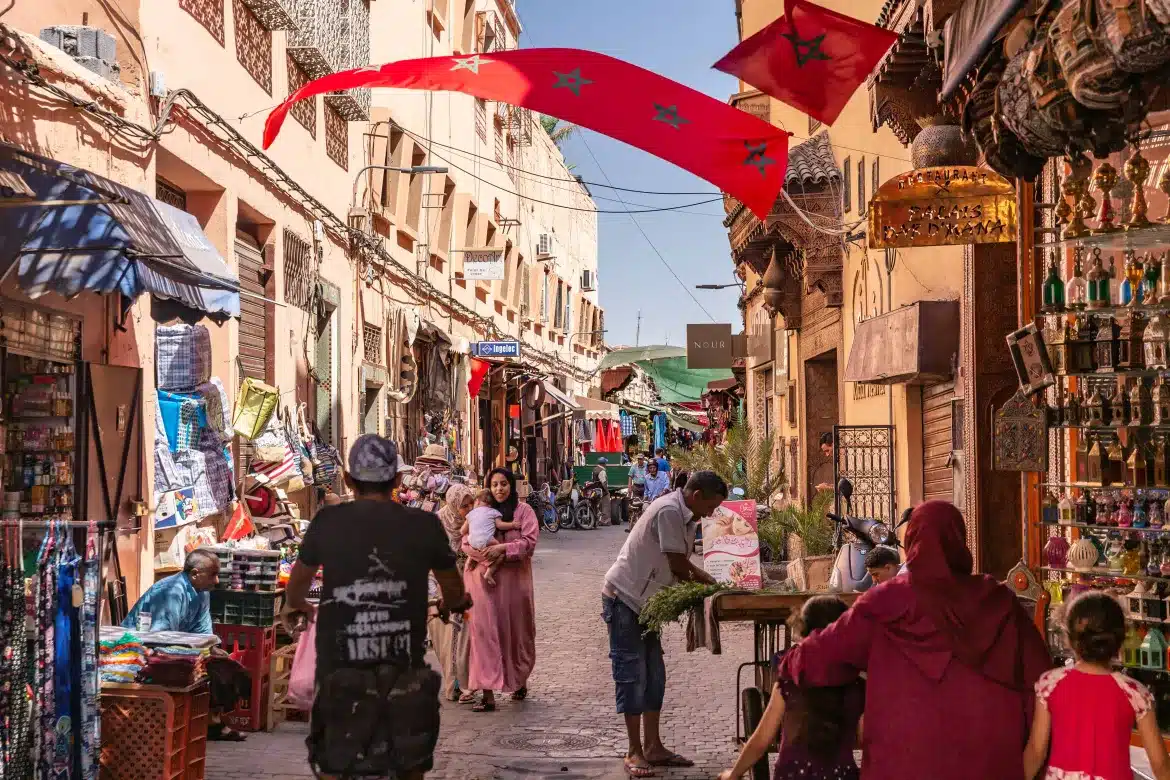
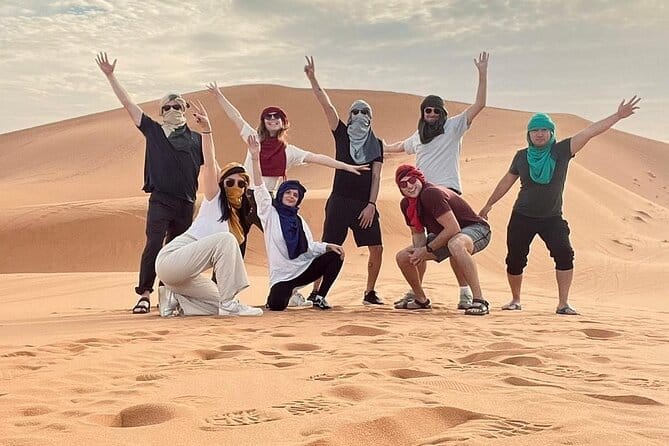
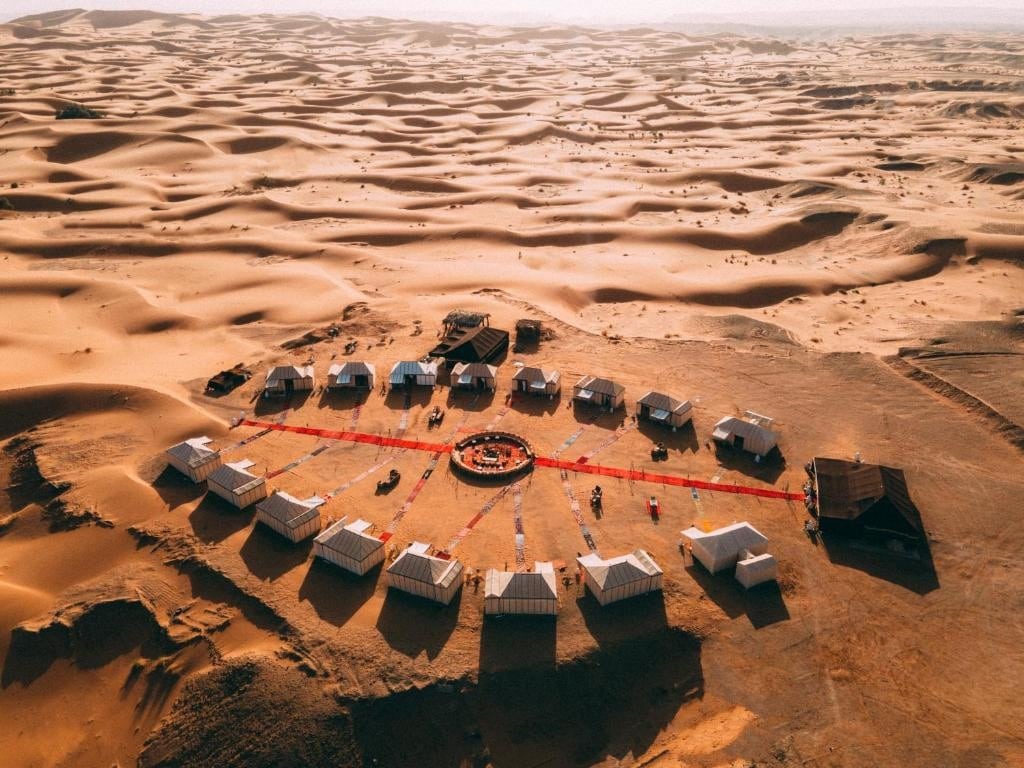
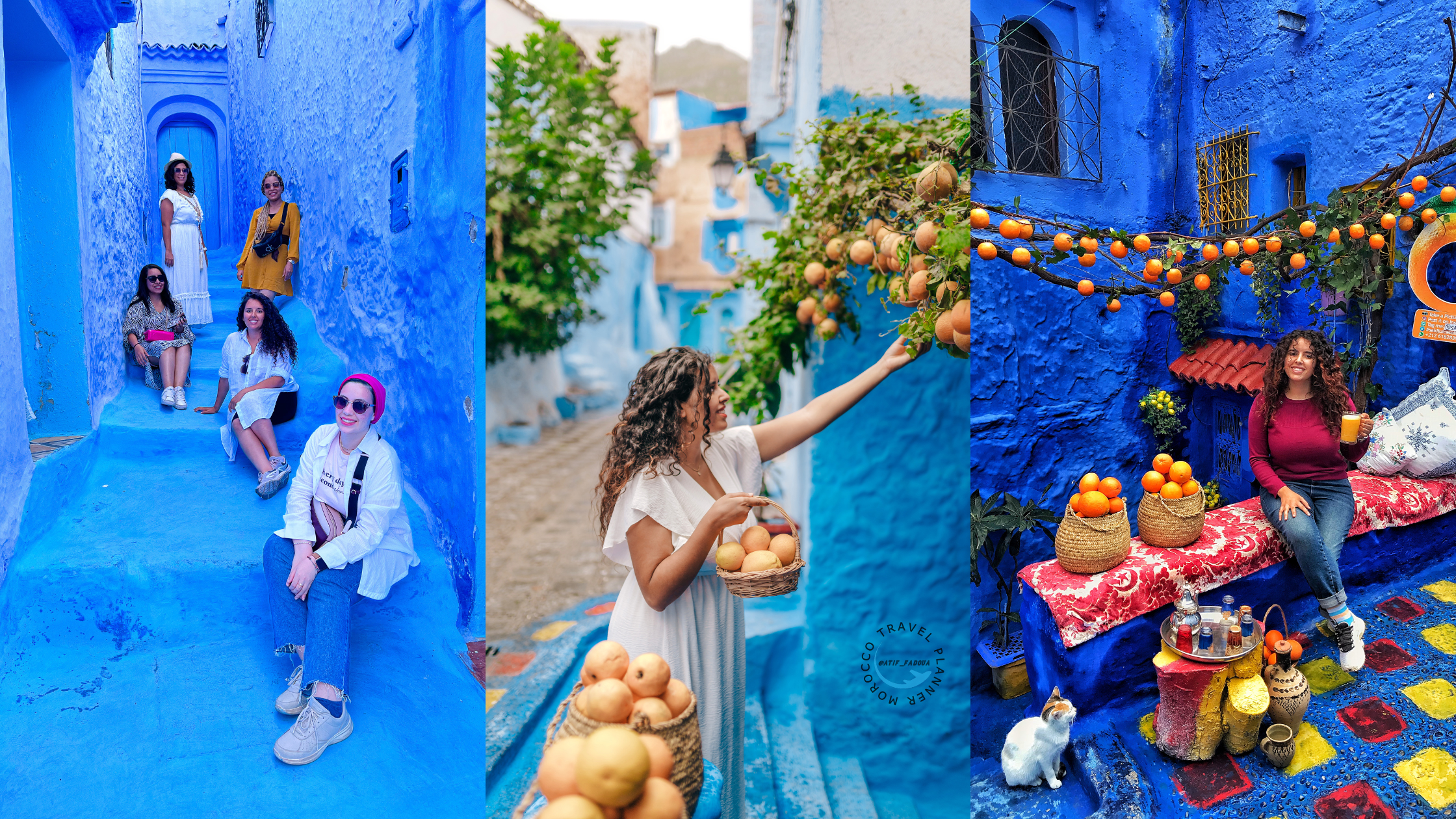
Accommodation Tiers: Choose Your Comfort Level
We offer three accommodation categories for this 12 days in Morocco itinerary, all featuring clean, comfortable properties with excellent locations. The itinerary and experiences remain identical; only accommodation standards differ.
Standard Tier
Best for: Budget-conscious travelers, backpackers, those prioritizing experiences over luxury
- Comfortable 3-star hotels and riads
- Private rooms with en-suite bathrooms
- Standard desert camp (comfortable tents, may have shared bathroom facilities)
- Breakfast included
- Clean, safe, and well-located properties
- Traditional Moroccan character in riads
Traditional/Comfort Tier (Most Popular)
Best for: Couples, families, travelers seeking an authentic Moroccan atmosphere with modern comfort
- Charming 3-4 star riads and boutique hotels
- Beautifully decorated rooms with traditional Moroccan design
- Luxury desert camp with private tent and en-suite bathroom
- Some properties feature rooftop terraces, small pools, or gardens
- Excellent breakfast spreads
- Attentive service
- Perfect balance of authenticity and comfort
Luxury/High-End Tier
Best for: Honeymoons, special occasions, travelers seeking premium comfort and service
- 4-5 star boutique hotels and luxury riads
- Spacious rooms/suites with premium amenities
- Deluxe desert camp with large tents, proper beds, private bathrooms, and electricity
- Properties feature swimming pools, spas, and fine dining
- Concierge services
- Highest quality furnishings and decoration
- Some historic palaces and kasbahs have been converted to luxury hotels
Note: Exact properties can be shared upon request and may vary based on availability. We work with trusted partners in each city to ensure quality regardless of the tier selected.